


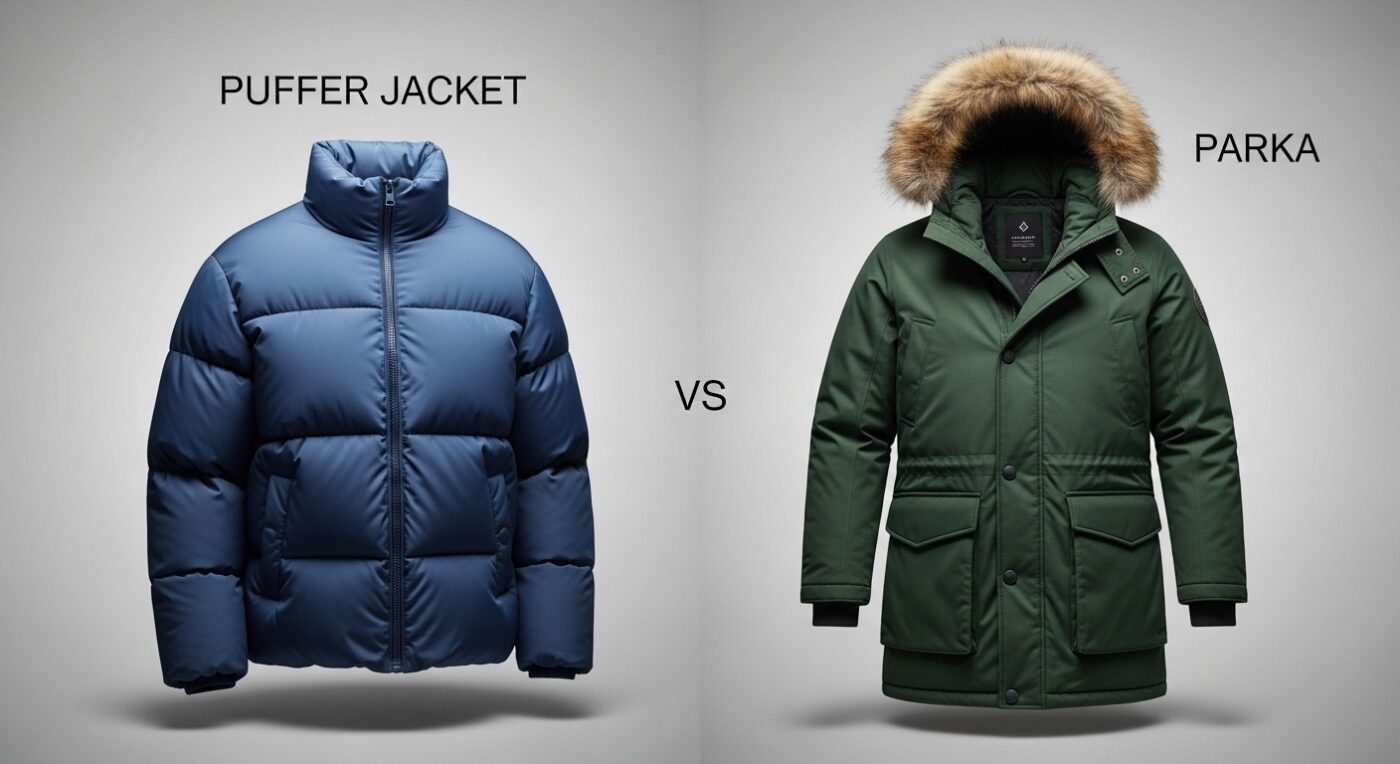

Since many people wear jackets when selecting to? Select the appropriate one for personal use. Thus it is quite difficult to decide which Category Is more suitable for you with such a variety of offers. Two mega trends that define winter are the outerwear, puffer jackets and parkas. Each type of jacket has its advantages and specific characteristics that is why comparison of the jackets is necessary. Below in this blog, we shall highlight some of the essential features of these ugly winter necessities to guide you when choosing one to buy.
Puffer Jacket vs Parka
With the advent of winter, people start donning warm clothes and thus selecting a proper jacket becomes a factor that decides the proper wearing gear for the winter. Snow, winds and sleet – in between all of this, keeping warm is the only way to go. But being able to choose among so many winter jackets, where and how do you go about it to find the best one that suits you? Two of the most common types of coats that one can wear during winter are parkas as well as puffer jackets – fabrics that were created to provide warmth but in two distinct ways.
If you are still confused between the classic parka style or the modern puffer jacket look, you are in the same boat. It can be confusing, which decision depends on the features, advantages, and disadvantages that can be described below. Well, let’s get into the nitty-gritty and the pros and cons of both of these cold weather accessories so you can make the right decision for yourself.
What Is a Parka?
A parka is a long, thick coat designed for extreme cold. The name comes from the Inuktitut language and was used to describe wool coats worn in the Arctic. Parkas are normally worn below the waist and they provide more coverage than jackets while being warmer. What began as a traditional Arctic clothing model developed by the Inuit population has become one of the most stylish and practical cold-weather garments that anybody can wear in harsh winter weather.
Parkas also come with an extra length and heavy weight and therefore are perfect for winter seasons. Often they have a large hood, sometimes it can be lined with faux or real fur that will protect your head and face from wind and snow.
Key Features of a Parka
- Length: Parkas are generally longer than most other winter jackets; parkas reach the middle of the thighs or even the knees. What you get with this added length is added warmth, primarily for the lower part of the body and this is great for extremely freezing days.
- Insulation: These shoes are uniquely intended to be warm during winter. Almost all parkas have liners that include down or synthetic insulators to retain body heat, and some have multi-layering for maximum heat at zero Kelvin.
- Hood: The hood is one of the most distinct aspects of most parkas. These hoods are mostly oversized, and accompanied by some fur, real or fake, to protect your face from strong winds and snow.
- Fit: Parkas as a rule are somewhat more casual and could incorporate some extra space to wear layers under them. This is particularly suitable for those lovers of thick rough Wears or extra clothing during the cold season.
- Weatherproofing: Some of the parkas have waterproof or water–resistant materials incorporated in them. This makes the people using them suitable for areas with snow or rain as they let the outside in while keeping the cold out.
Types of Parkas
There are several variations of parkas, each designed to meet specific needs:
- Arctic Parkas: These are the warmest and most rugged parkas used where the temperature is really low. Large and heavy duty ones are usually seen in polar areas or in other areas with extreme winter conditions.
- Ski Parkas: Ski parkas are slightly lighter in weight but they are sufficiently warm all the same. They rely on the fact that they are mobile and are usually made of waterproof or windproof fabric so that they are appropriate for outdoor sporting activities like skiing among others.
- Fashion Parkas: Combining glamorous looks with protection from extreme cold, fashion parkas are not as insulated as the military ones but offer a much more appealing appearance.
What Is a Puffer Jacket?
A puffer jacket or a quilted jacket is commonly recognizable because it has compartments, or “puffy jacket” looking areas that are generally stuffed with down or synthetic fill. Puffers, as a rule, weigh significantly less than parkas but offer quite warm layers, so it is a good choice for those who have to wear comfortable clothing in dubious weather.
Regardless of what type of material it is used, puffer jackets can be worn in different types of winter weather depending on the insulation. They are very flexible in their use and can be used under other jackets or independently based on the climatic conditions outside.
Points to take into consideration while wearing Puffer Jacket
- Weight: The lightweight characteristic is among the main features of a puffer jacket used as a marketing strategy. Although they provide a lot of warmth they are significantly lighter than parkas and this makes them very popular with individuals who do not like to wear thick jackets.
- Insulation: Puffers, those bags that are filled with a synthetic material varied in types, can also be filled with down feathers. Down is famous for its ability to be warm and compact; however, synthetic insulation is more effective at using moisture.
- Quilted Design: As you can see, the quilted construction of these jackets gives them their “puffy jacket” look. Quilting patterns form pockets that retain heat in the jacket so that heat is evenly distributed on the entire jacket.
- Fit: These jackets are usually relatively tight-waisted and are worn over other jackets. There are those that end at the lower abdomen and those that end half way the thighs.
- Weather Resistance: Although not all puffer jackets are waterproof most of them are water repellent or made of fabrics that have been treated with a DWR coat which stands for durable water repellent.
Types of Puffer Jackets
Like parkas, puffer jackets come in a range of styles and levels of insulation:
- Lightweight Puffers: These are good for somewhat cold weather or for wearing under a warm outer garment. They are portable, particularly for travelers because they do not occupy much space when packed.
- Heavyweight Puffers: Sophisticated for cold seasons, winter weight down jackets has a heavier insulation yet come in lighter feels.
- Packable Puffer Jacket: These are relatively very light and can be easily folded or even packed into tiny spaces to allow for easy movements when hiking or moving from one place to the other.
Parka vs. Puffer – Warmth
As for warmth, the parkas look more advantageous in the utmost severities of the climate. Parkas are longer and have thicker insulation thereby providing a better coverage hence capturing body heat to retain it than just a jacket especially in below-freezing conditions. Parkas for women are perfect for those residents who in different regions experience severe winters, or those who have a need to stay outside in the cold for an extended period of time.
But do not underestimate the coziness of a puffer jacket for women. It’s also not a rarity to find puffers that boast impressive filling with down or other synthetic materials which provides excellent thermal performance, including the ability to comfortably wear a puffer in freezing weather. The only significant difference is that genuine puffer jackets should be thinner than breakaway-jackets to provide thin insulation for such activities as climbing, skiing or running daily errands in relatively cool climate conditions.
- Verdict: Parka is warmer and for individuals who require much warmth due to very cold weather, is recommendable. If you want the addition of more warmth but still don’t want to feel weighed down particularly for days when the weather is not extremely cold then a puffer jacket is the best.
Parka vs. Puffer – Mobility and Versatility
Another advantage of many puffer jackets is their ability to put on or remove them easily. As puffers are usually lighter in construction than other jackets, and are often not as long, there is more freedom of movement. This makes them appropriately firmed for occasions such as / hiking, ski.
Parkas, however, are larger in size and have thickness and often this may limit one’s movements. In fact, a lot of present day parkas have a side zipper or a detachable waist belt to facilitate movement. However, parkas are not as adaptable to vigorous activities most of the time.
Verdict: If you plan on hitting the slopes or if you want a free flow movement in your torso, the puffer jacket is mostly recommended. If you are on the lookout for a jacket to wear when you are not very physically active, then you can wear a parka.
Parka vs. Puffer – Weather Resistance
As for the weather shield, it is parkas because if you reside in areas with wet sleet or freezing precipitation. Most parkas are waterproof or water repellent and afford a good level of protection against snow, rainfall and wind.
Puffer jackets even if they are generally made from water repellent fabrics are not always 100% waterproof. They are fine with light snow or some showers, imagine if you are traveling in heavy snow or it is raining a lot then you will need to add a water repellent layer over the puffer.
- Verdict: If you experience more often wet, snowy winters, it’s better to choose a parka to feel warmer and stay dry at the same time. Thus, puffers are slightly more appropriate for dry and cold climates or when they are worn under a waterproofing layer.
Choosing Between a Puffer Jacket and a Parka
- Consider Climate
Sometimes it depends on your local climate; I don’t know whether you should use a puffer jacket or a parka. If you live in a climate that does not experience severe freezing and snowfall such a puffer jacket may be enough. But if you are challenged by severe cold, lots of snow and strong wind, the parka would probably be more appropriate.
- Assess Your Activities
Consider what purpose it will have/do will help you decide if you need the jacket. If you’re fine having a protective cover for events and drives but if you want to stick with something more fashionable, then both styles are suitable. However, if you are going to spend most of your time outside then in cold conditions, a parka will be more beneficial to you.
- Style Preferences
Your choice of style to address clients also has some significant influence in the process. If you like things simple and they can be both casual and formal this is you, and then a black puffer jacket should do it for you. If you are inclined towards using your coat for everyday wear in terms of functionality then likely, the parka will suit you.
- Budget Considerations
In terms of the price, both jackets are available in different price tags; however parka jackets may prove to be pricey if you want to buy quality jackets with Insulainteriorsrior. Think carefully about how many thousands of dollars you are prepared to spend to have added warmth and possibly more features.
- Functionality and Features
Consider the peculiarities of each type of jacket on the following criteria. For instance if you require a jacket that has multiple pockets, adjustable hoods or a particular type of insulation, then weigh the available variety in both styles of jackets.
Style Your Puffer Jacket
Coats of this type can be worn in different ways — that is why puffer jackets are great for winter clothing collections. Here are some tips on how to wear a puffer jacket effectively:
- Casual Outfits
A puffer coat can be worn with skinny trousers and ankle boots if you want casual and comfortable attire. This outfit provides a functional look, yet is a very stylish one that can be worn for errands or casual events.
- Sporty Look
Workout wear is perfect to achieve the sporty look; wear stilettos instead of sneakers and a puffer jacket instead of a crop top. Cook it over a hoodie or sweatshirt, and then complete the appearance with leggings or casual pants.
- Layering
Outerwear; it is well suitable for layering especially the puffer jackets. It’s best layered over a chunky knit sweater or hoodie to make it even cozier to wear. Combined with warm, it also gives the texture to that outfit.
- Accessorize
Don’t forget to accessorize! Scarves, beanies, and gloves can dress up your puffer jacket outfit as well as keep you warm.
Style Your Parka
Thus parks can also be fashionable and useful. Here’s how to wear a parka effectively:
- Casual Chic
A parka can be worn with a plain t-shirt, leggings, and combat boots which will be good for a casual and trendy look. The parka brings another layer of warmth but not at the expense of fashion or trend.
- Dress it up
To dress it up a little, put on a parka over a dress and thigh-high boots. These arrangements are perfect for making her warm while at the same time giving her that classy look for evening use.
- Layering with Chunky Knits
If you’re going for cute yet warm, wear a chunky knit sweater under your parka. The look is best suitable for cold days mainly because of the head gear.
- Accessorize Wisely
People should accessorize their parka with items such as statement scarfs, beanie or even gloves. These accessories not only fill the spirit of personality and color to your outfit, but also guarantee your warmth.
Which One Should You Choose?
Deciding between the two will depend on what you do in your daily life, the weather, and what you like. Here’s a quick breakdown to help you choose:
- Choose a parka if: You are in the area that most severely freezes during winter, so you need the most heat, or you want clothing that will cover you from head to toe with style.
- Choose a puffer jacket if: You want a slim model that will allow you effective maneuverability and can be used in various winter situations.
So in this sense, there is actually no wrong decision when it comes to parkas and puffers.



Leave a Comment