


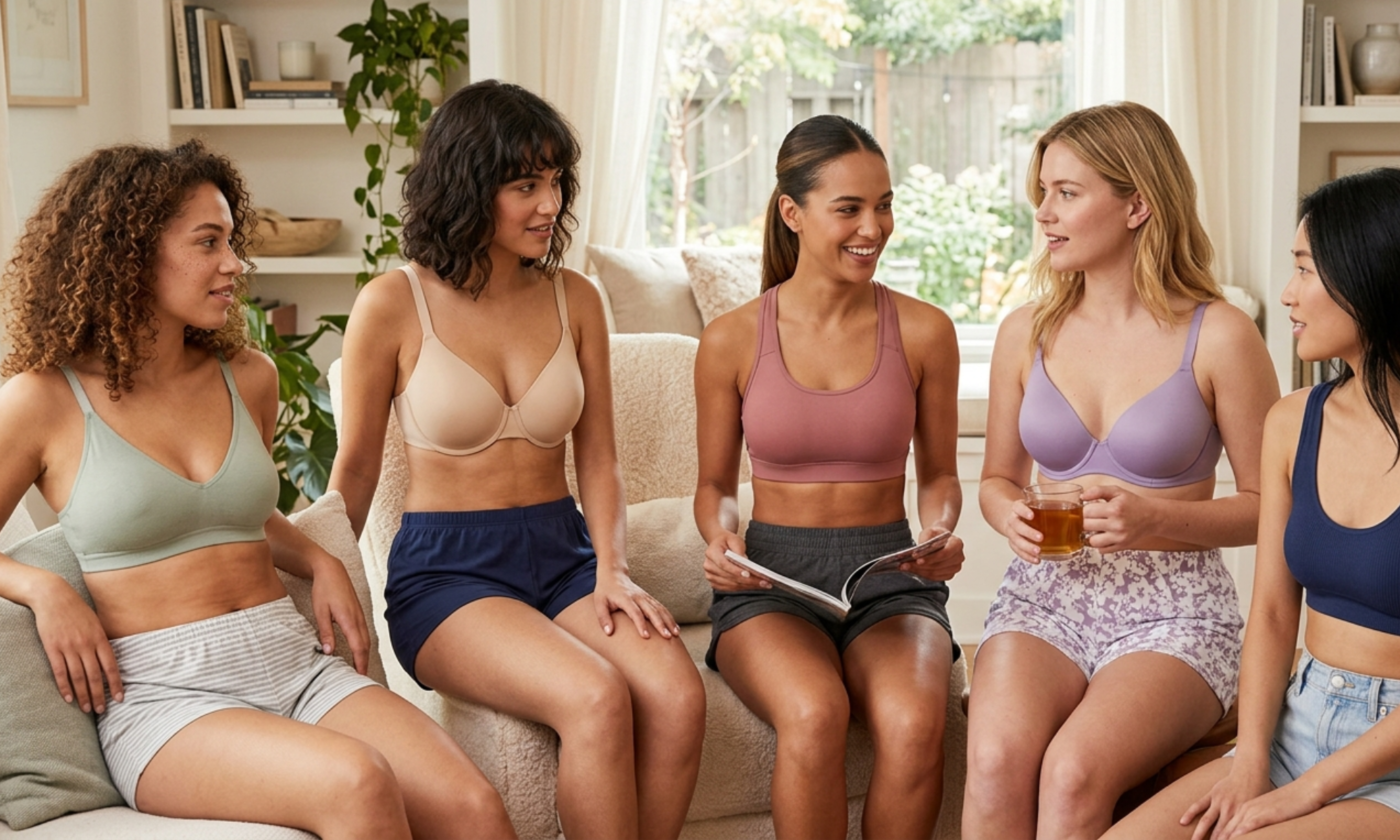

A bad bra can ruin your entire day. The straps dig in, the underwire pokes, you’re adjusting it every hour, and by evening you can’t wait to take it off. Sound familiar? Most women have been there. The good news is that finding a comfortable bra is not some impossible task.
You just need to know what to look for and which types actually work for your body and lifestyle.
This guide covers the most comfortable bra types, who they work best for, and how to pick the right one without wasting money on something that ends up sitting in the back of a drawer.
Why Comfort Matters When Choosing a Bra
A bra is something you wear for 10 to 14 hours a day. If it does not fit well or the construction is poor, you feel it constantly. Comfort is not a bonus feature. It affects your posture, your focus, and how you feel moving through the day.
Common Problems Women Face with Uncomfortable Bras
The most frequent complaints are underwire that digs into the ribs or sides, straps that slip off the shoulders or cut into the skin, cups that gap or overflow, and bands that ride up at the back. Red marks on your skin at the end of the day are a clear sign something is off. So is that constant urge to pull your bra back into place while sitting at your desk or standing in line.
Synthetic fabrics that don’t breathe make things worse in warm weather. Heavily padded cups add bulk under fitted clothing and can feel suffocating in heat. These are all common problems, and none of them mean you have an unusual body. They usually mean the bra is the
wrong size, wrong style, or wrong construction for your shape.
Signs You Are Wearing the Wrong Bra Size
If the band rides up at the back, it’s too loose. If the center front panel floats away from your sternum, the cups are too small. If the straps leave marks or you tighten them all the way to feel supported, the band is carrying more than it should. If the cups pucker or wrinkle, they’re too large.
Most women are wearing a band size that’s too big and a cup size that’s too small. A snug band does most of the support work. The straps are just there to keep the cups in place.
How a Comfortable Bra Improves Daily Confidence
When a bra fits properly, you stop thinking about it. That is really the goal. You can focus on work, a workout, a dinner out, or whatever you’re doing without adjusting straps or shifting cups every few minutes. Good support also helps with posture, which affects how you carry yourself. A bra that works quietly in the background lets you move through the day without distraction.
Most Comfortable Types of Bras for Daily Wear
For everyday wear, you want something that disappears under clothing and stays comfortable from morning to night. Here are the types that do that reliably.
T-Shirt Bra (Smooth & Everyday Comfort)
Among all t shirt bra types, the standard seamless or lightly lined version is the most practical option for daily use. The cups are smooth with no lace or texture on the outer surface, so nothing shows through fitted tops or thin fabrics. Most t-shirt bras have a light mold or padding that holds its shape whether you’re wearing it or not.
These work well for most breast shapes and sizes. The construction is simple, the fit is clean, and they tend to hold up well through regular washing. If you only own two or three bras, at least one of them should be a t-shirt bra.
Wireless Bra (No Pain, Full Relax Fit)
Wireless bras have improved a lot. The earlier versions offered barely any support, but the current designs with structured cups and firm elastic bands are genuinely useful for B through D cup sizes. Without underwire, there’s nothing to poke, shift, or dig in.
Women who work from home, spend long hours at a desk, or just prefer a lighter feel throughout the day tend to prefer wireless options. They’re also good for anyone recovering from surgery or dealing with sensitivity around the ribcage.
Bralette (Lightweight & Trendy Comfort)
A bralette is essentially a soft, unstructured bra with no underwire and minimal padding. They are best suited for smaller cup sizes, typically A through C. Larger cup sizes often find them uncomfortable because there is not enough structure to distribute weight properly.
What bralettes do well: they feel like almost nothing. They layer well under loose tops, work for low-impact days, and come in styles that look good peeking out from low-cut necklines. They are not workout bras and they are not meant for heavy support, but for light daily wear they are one of the most comfortable options around.
Best Comfortable Bras for Support and Shape
Some women need more than just soft fabric. If you need support through a long workday or want a defined shape under clothing, these are worth knowing about.
Full Coverage Bra (Maximum Support)
Full coverage bras have cups that extend higher on the breast and cover more surface area. This is one of the better options when looking at the different types of bras for women with fuller busts or bell-shaped breast profiles. In fact, if you’ve been searching for the best bras for bell shaped breasts, full coverage styles are usually the first recommendation because they hold everything in place without cutting into the top of the breast.
They’re not the most exciting bra in the drawer, but they do their job. The coverage means less spillage, and the wider band and straps mean better weight distribution.
Minimizer Bra (Comfort + Balanced Shape)
Minimizer bras redistribute breast tissue rather than pushing it up or forward. The result is a flatter, more even profile under clothing. Women with larger busts often find button-down shirts and fitted tops much easier to wear with a minimizer.
These bras tend to be wire-supported for proper function. If comfort is the concern, look for versions with padded underwire channels and wider side panels. They make a real difference when you’re on your feet all day.
Lightly Padded Bra (Soft Shape Without Heavy Padding)
Lightly padded bras have thin foam cups that add a little shape without the bulk of heavily molded bras. They feel softer and less stiff than structured padded styles, and they don’t add significant size. Good for women who want a smooth silhouette without the weight of thick cups.
Comfortable Bras for Special Situations
Some situations call for a specific type. A regular everyday bra doesn’t cut it during a workout, and a standard underwire bra can be genuinely painful during pregnancy. Here’s what works for each case.
Sports Bra (Best for Workout Comfort)
The main job of a sports bra is to limit movement. For low-impact activity like yoga or walking, a light compression style works fine. For running, aerobics, or any high-intensity training, you need an encapsulation-style sports bra with individual cups and a firm band. Wearing the wrong type means discomfort during exercise and potential long-term ligament strain.
Look for moisture-wicking fabric and a band that feels snug without restricting breathing. A sports bra that’s too loose is just a regular bra with shorter straps.
Maternity & Nursing Bra (Soft for Pregnancy Use)
During pregnancy and nursing, breast tissue changes quickly. Underwire can restrict lymphatic flow and feel painful as the body changes, which is why most maternity bras are wireless. They are made from stretchy, soft fabrics that adjust with the body.
Nursing bras add drop-down cups for easy access. A good nursing bra should feel comfortable worn all day, including at night during early postpartum months when frequent feeding means you rarely take it off completely.
Strapless Bra (Comfortable Fit for Party Dresses)
Among the different types of strapless bras, the most comfortable are the ones with silicone grip along the top and bottom edges and a wide, structured band. Without straps to help with support, the band does all the work, so fit matters more here than with any other style.
Strapless bras are notoriously tricky. The ones that stay in place and feel secure usually have boning in the sides and a very firm band. Look for your exact size rather than going up a band size for comfort. A looser band will fall down no matter how much silicone grip it has.
How to Choose the Perfect Comfortable Bra
Knowing the types of bras that exist is a start. Knowing how to pick the right one for your specific situation takes a bit more.
Best Fabric for Comfortable Bras
Cotton is breathable and best for sensitive skin. Microfiber is soft and smooth under clothing. Lace looks good but can irritate skin if it sits directly against it, so many women prefer lace only on the exterior. Avoid fully synthetic fabrics with no stretch in the band. They don’t breathe well and can feel restrictive over a long day.
For sports bras, look for moisture-wicking polyester blends. For sleeping or soft support at home, cotton or bamboo fabric options feel the most natural against skin.
Correct Bra Size Measuring Tips
Measure your band size by wrapping a measuring tape snugly around your ribcage just under the bust. If the number is even, that is your Bra size. If odd, round up. Then measure around the fullest part of your bust.
The difference between the two measurements tells you your cup size. One inch is an A cup, two inches is B, three is C, and so on.
Get measured every year or two, or any time your weight changes significantly or after pregnancy. Sizes shift with the body, and wearing an old size long after your shape has changed is one of the main reasons women end up uncomfortable in bras that once worked perfectly fine.
Tips to Make Bras Last Longer and Stay Comfortable
Hand wash whenever possible, or use a mesh laundry bag on a delicate cycle. Never put a bra in the dryer. Heat breaks down the elasticity in the band and degrades the foam in the cups faster than anything else.
Rotate between at least three bras so each one gets a day to recover its shape. Store them cup inside cup rather than folding the cups flat. Hook the clasp before washing so it doesn’t catch on other fabric. A well-cared-for bra can stay comfortable and functional for 12 to 18 months. One that goes through a dryer regularly might not make it to six months before the band gives out.Share






Leave a Comment