


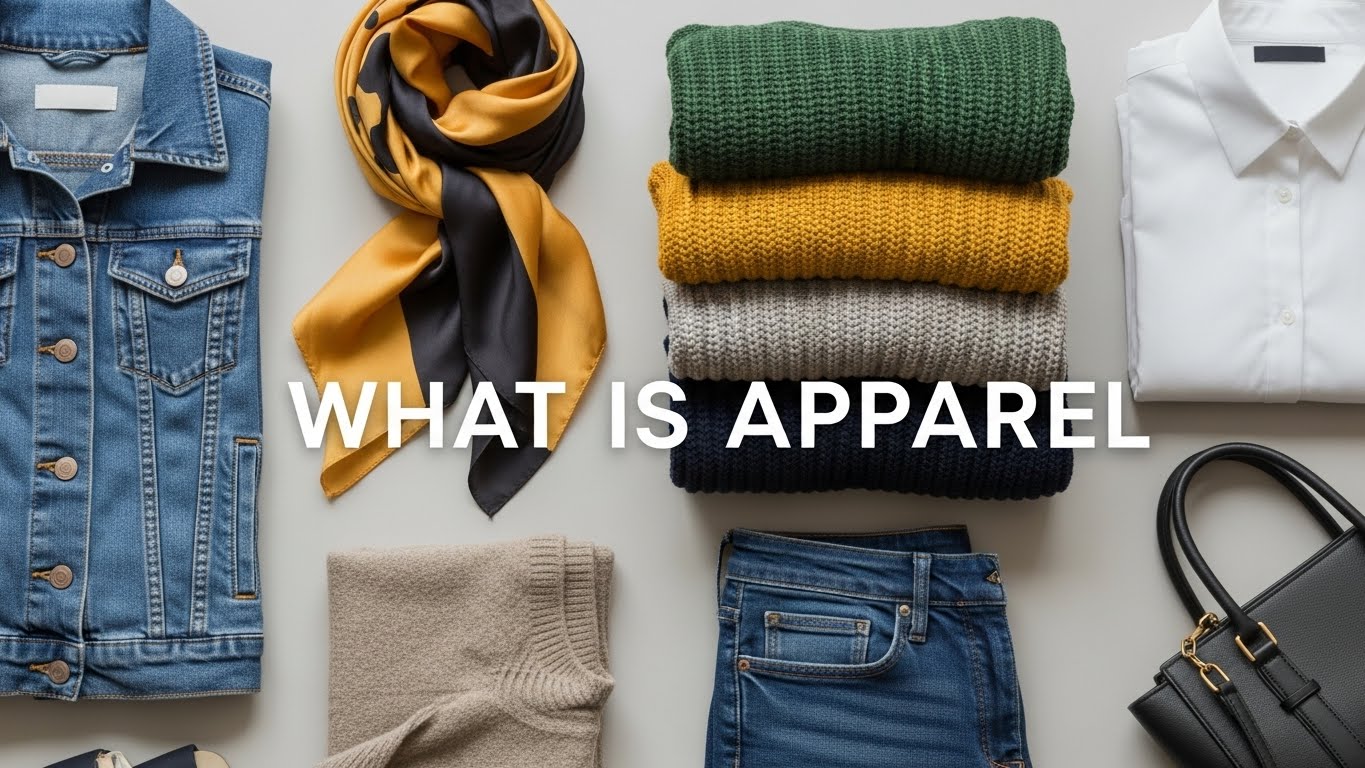

We live our lives in apparel. It is the first thing we put on in the morning and the last thing we take off at night. Yet, the term “apparel” is often misunderstood or used interchangeably with “fashion” or “clothing,” missing the depth of what the word actually represents.
In the industry, Apparel refers to the overarching system of wearable products. It encompasses everything from the engineering of the fabric and the cut of the silhouette to the final function of the garment. While “fashion” is about the trend and the image, “apparel” is about the product itself, its construction, its utility, and its classification.
This is not just a list of clothes; it is a breakdown of the entire ecosystem of what we wear. From the manufacturing behind activewear to the strict etiquette of formal attire, this guide covers everything you need to know about the vast world of apparel.
What is Apparel?
At its core, Apparel is an all-encompassing term used primarily in the textile and retail industries to describe any article of clothing or attire worn on the human body.
While “clothing” is a general term for things that cover us, “Apparel” is the professional classification. It is derived from the Old French word apareillier, meaning “to make ready” or “gear.” In the modern industry, Apparel specifically refers to garments made from fabric or textiles.
Key Distinctions:
- Apparel vs. Accessories: Apparel covers the body (shirts, pants, coats). Items like handbags, belts, jewelry, and scarves are classified as Accessories, not apparel.
- Apparel vs. Footwear: Shoes, boots, and sandals form their own distinct industry sector and are rarely grouped under the technical definition of apparel.
- The Industry Definition: When business analysts talk about the “Apparel Industry,” they are referring to the design, manufacturing, and selling of wearable garments—a multi-trillion dollar global market.
The Major Types of Apparel You Should Know
To categorize apparel properly, we cannot just list items like “t-shirt” or “jeans.” We must categorize them by Function, Occasion, and Construction.
-
Casual Wear (The Everyday Staples)
Casual wear is the dominant category in the modern world. It represents the relaxation of dress codes over the last century. This is apparel designed for comfort, leisure, and informal social interaction. It prioritizes ease of movement and durability over strict structure.
- Defining Features: Relaxed silhouettes, soft fabrics, and low maintenance. This category allows for the most personal expression because there are very few “rules.”
- Common Garments: T-shirts (crew neck, V-neck), Jeans (denim), Polo shirts, Hoodies, Sweatshirts, Cargo pants, and Shorts.
- Key Materials: Cotton is the undisputed king of casual wear due to its breathability. You will also find Denim (cotton twill), Flannel, and Jersey knits.
- When to Wear: Weekend outings, grocery runs, informal gatherings, and increasingly, in creative or relaxed office environments.
2. Formal Wear (Occasion Wear)
Formal wear is the apparel of ceremony. It is governed by strict social protocols and historical traditions. Unlike casual wear, the goal here is not comfort, it is conformity, elegance, and respect for the occasion.
- Defining Features: Highly structured construction. These garments often use padding, stiff interfacings, and tailoring to force the fabric into a specific shape that flatters the body.
- Common Garments:
- Men: Tuxedos, Morning suits, Tailcoats, Dress shirts with French cuffs.
- Women: Evening gowns, Cocktail dresses, Ball gowns.
- Key Materials: The most expensive fibers are found here. Fine Wool (Merino, Worsted), Silk (Satin, Chiffon, Organza), Velvet, and Brocade.
- When to Wear: Weddings, galas, state dinners, funerals, and “Black Tie” events.
3. Business & Corporate Attire
Sitting between Casual and Formal is Business Attire. This is “professional apparel” designed to project competence, authority, and reliability. While the “suit and tie” standard is fading, this category remains vital for legal, financial, and corporate sectors.
- Defining Features: Clean lines, neutral colors (navy, black, grey, beige), and modesty. The fit is tailored but not as restrictive as formal wear.
- Common Garments: Blazers, Trousers (slacks), Pencil skirts, Button-down Oxford shirts, Blouses, and Sheath dresses.
- Key Materials: Wool Blends (for durability), Cotton Poplin (for crisp shirts), and increasingly, blends with Elastane/Spandex to provide comfort during long workdays.
- When to Wear: Job interviews, client meetings, office environments, and professional conferences.
4. Activewear & Sportswear
This is the most technically advanced sector of the apparel industry. Activewear is clothing designed specifically for physical exertion. It is engineered to enhance performance rather than just cover the body.
- Defining Features: Moisture management (wicking sweat), thermal regulation, and high stretchability. Construction often uses “flatlock seams” to prevent chafing during movement.
- Common Garments: Leggings, Sports Bras, Compression tops, Tracksuits, Gym shorts, Yoga pants, and Swimwear.
- Key Materials: This category is dominated by Synthetics. Polyester, Nylon, and Spandex (Lycra) are essential because cotton absorbs sweat and gets heavy, whereas synthetics wick moisture away.
- When to Wear: Gym sessions, running, yoga, competitive sports, and thanks to the “Athleisure” trend, everyday errands.
5. Outerwear
Outerwear is the “shield” of the apparel world. It is the third layer worn over tops and bottoms, designed exclusively to protect the wearer from environmental elements like rain, wind, snow, and cold.
- Defining Features: Insulation and weatherproofing. These garments are heavy and often feature hardware like zippers, toggles, and hoods.
- Common Garments:
- Lightweight: Denim jackets, Bombers, Trench coats, Windbreakers.
- Heavyweight: Parkas, Puffer jackets (Down jackets), Peacoats, Overcoats.
- Key Materials: Wool (for warmth), Leather (for wind protection), Down/Feathers (for insulation), and coated Nylons or Gore-Tex (for waterproofing).
- When to Wear: Outdoors during inclement weather or changing seasons.
6. Loungewear & Sleepwear
Historically, people wore their day clothes until they went to bed. Today, we have a specific category for “at-home” apparel. This is distinct from Activewear because it offers zero compression—it is purely about softness and relaxation.
- Defining Features: Loose, flowing fits. Elastic waistbands are standard. Labels are often printed directly on the fabric to avoid scratching the skin.
- Common Garments: Pyjamas, Robes, Nightgowns, Oversized tees, Joggers, and Onesies.
- Key Materials: Modal and Bamboo Rayon are popular for their silky feel. Flannel and Fleece are used for warmth, while Silk is used for luxury sleepwear.
- When to Wear: Sleeping, recovering from illness, or relaxing at home.
7. Innerwear (Intimates & Hosiery)
Often overlooked, this is the “foundation” category. Innerwear is the apparel worn directly against the skin. Its primary purpose is hygiene, support, and shaping the body to make outer garments look better.
- Defining Features: High elasticity and softness. Hygiene is the priority here, so breathability is non-negotiable.
- Common Garments: Briefs, Boxers, Bras, Panties, Shapewear, Undershirts, and Socks.
- Key Materials: Cotton is preferred for hygiene, but Spandex/Elastane is required for fit. Lace and Mesh are common for aesthetic reasons in lingerie.
Understanding Fabrics
If the design is the soul of a garment, the fabric is its body. The difference between a $10 t-shirt and a $100 t-shirt is rarely just the brand name; it is usually the engineering of the textile. In the apparel industry, materials are broadly classified into three families: Natural, Synthetic, and Semi-Synthetic.
1. Natural Fibers (The Old World)
These are harvested from plants or animals. They are prized for breathability and comfort.
- Cotton (The King of Apparel): Hydrophilic (absorbs water), breathable, and hypoallergenic. It creates 90% of casual wear. Expert Tip: Look for “Long Staple” cotton (like Pima) for a softer feel that doesn’t pill.
- Wool (The Insulator): Thermostatic (warm in winter, cool in summer) and odor-resistant. Used in suits and coats.
- Silk (The Luxury): The strongest natural fiber, known for its shimmer and liquid drape. Used in evening wear.
- Linen (The Summer Shield): Stiff, strong, and incredibly breathable. It wrinkles easily, but that’s part of its charm.
2. Synthetic Fibers (The Performance Engineers)
Developed in labs, these plastic-based fibers revolutionized activewear.
- Polyester: The workhorse. It resists wrinkles and shrinking, and pushes sweat to the surface (hydrophobic). Ideal for gym clothes.
- Nylon: Stronger and smoother than polyester. Used in windbreakers and hosiery.
- Spandex / Elastane: The stretch factor. It is blended into almost everything (jeans, socks) to provide fit and movement.
3. Semi-Synthetics (The Hybrids)
Made from natural wood pulp but processed with chemicals.
- Rayon / Viscose: “Artificial Silk.” Drapes beautifully but is cheaper than silk. Standard for blouses.
- Modal: Made from beech trees. Softer than cotton, making it perfect for underwear.
- Lyocell (Tencel): The eco-friendly choice. Antibacterial and incredibly soft.
Apparel Categories by Production Method
Finally, apparel is also classified by how it is made. This dictates the price and quality.
- Mass Market (Ready-to-Wear): This is 90% of the apparel world. Clothes are made in factories in standardized sizes (S, M, L, XL) and sold off the rack. (e.g., H&M, Zara, Gap).
- Slow Fashion / Boutique: Produced in smaller batches with higher quality materials, often focusing on sustainability and ethical labor practices.
- Haute Couture (High Fashion): The pinnacle of apparel. These are garments made by hand, custom-measured for a single client, using the rarest materials. It is considered art as much as it is clothing.
Conclusion
Understanding apparel is about understanding context. A tuxedo is a masterpiece of tailoring, but it is useless at the gym. A hoodie is the ultimate comfort item, but it disrespects the code of a boardroom. By recognizing these categories—from the protective utility of Outerwear to the engineered performance of Activewear—you can build a wardrobe that is ready for every aspect of your life.








Leave a Comment