




Jeusol3 is an emerging digital framework and technology platform that is gaining attention for the way it blends real-time analytics, machine learning, automation, and modular design into a single system. It is not a term tied to a single industry or use case, but rather a flexible and powerful approach that organizations can adopt to improve operational efficiency, make informed decisions, and streamline complex workflows.
Unlike older systems that rely on periodic reporting or rigid structures, Jeusol3 is designed for continuous learning and real-time processing. This means it can adjust to changing data patterns, anticipate future trends, and automate responses without waiting for manual input. As a result, businesses using Jeusol3 can act faster, reduce manual error, and accelerate growth across sectors.
Jeusol3 blends advanced technologies into a cohesive platform. It is often described as a digital ecosystem rather than just a tool because it brings together data ingestion, processing, optimization, and actionable insights all in one place. This makes it a compelling choice for modern enterprises navigating a landscape driven by data.
Core Features That Set Jeusol3 Apart
At the heart of what makes Jeusol3 valuable is its architecture and feature set:
Real-Time Analytics
Jeusol3 processes incoming data immediately rather than waiting for batch summaries or delayed reports. This real-time capability allows businesses to make decisions with current insights.
Predictive Intelligence
Built-in machine learning models help Jeusol3 anticipate patterns, identify anomalies, and forecast future outcomes. These predictions help organizations plan and act proactively.
Seamless Integration
Jeusol3 is designed to work with existing infrastructure. Whether it’s a legacy database, cloud platform, internal system, or IoT network, the framework can integrate without requiring a complete overhaul of current operations.
Modular and Scalable Design
The modular nature of Jeusol3 allows users to adopt only the components they need, scaling up as business demands grow. This makes it suitable for both small teams and large enterprises.
User-Friendly Interface
Ease of use is a key design consideration, meaning users with varying technical skill levels can work with Jeusol3 effectively after appropriate training.
Strong Security and Compliance
Advanced encryption and access control features safeguard sensitive data, addressing growing concerns around cyber threats and regulatory compliance.
How Jeusol3 Works
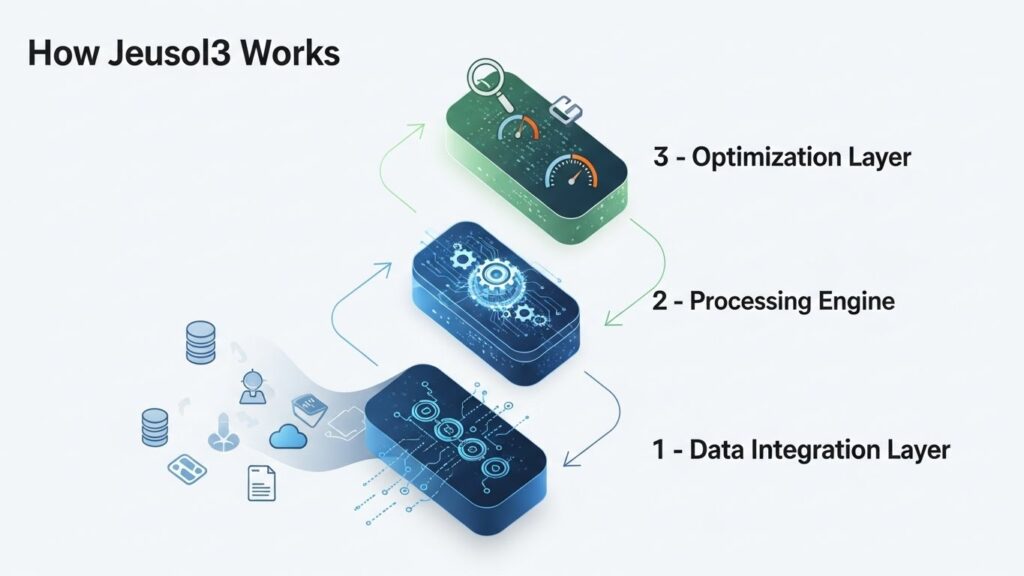
Jeusol3 operates through several interconnected layers:
Data Integration Layer
This layer connects multiple data sources, including internal databases, external feeds, cloud services, and IoT devices. It gathers data continuously, ensuring that no critical information is overlooked.
Processing Engine
Once data is collected, the Jeusol3 processing engine analyzes it using sophisticated machine learning algorithms. Within this stage, the system detects trends, identifies anomalies, and continuously refines its models based on new data.
Optimization Layer
The final layer translates insights into actions. This might include automating routine processes, generating alerts, or adjusting workflows in real time to maximize performance.
Real-World Applications of Jeusol3
Jeusol3’s flexibility makes it applicable across numerous industries:
Healthcare
In healthcare, Jeusol3 can process patient data instantly and support decision-making for diagnostics, patient flow, and resource allocation. This helps improve care outcomes while reducing administrative load.
Finance
Financial institutions use Jeusol3 to detect fraud in real time, automate risk assessment and compliance tasks, and tailor customer offerings based on behavior patterns.
Manufacturing
Manufacturers benefit from predictive maintenance, quality control optimization, and supply chain visibility when deploying Jeusol3 within their systems.
Retail and E-Commerce
Retailers leverage Jeusol3 for inventory forecasting, personalized customer experiences, and dynamic pricing strategies based on live market and customer data.
Education
Educational institutions can use Jeusol3 to enhance e-learning platforms, personalize curriculum paths, and analyze performance metrics to improve student outcomes.
Smart Infrastructure and IoT
Jeusol3 also plays a role in smart city projects, where real-time monitoring and predictive analytics help optimize traffic management, energy use, and public services.
Benefits That Make Jeusol3 Valuable
Improved Efficiency and Accuracy
By automating repetitive tasks and processing data instantly, Jeusol3 cuts down on manual review and reduces errors.
Stronger Decision-Making
Access to up-to-date insights allows decision makers to respond swiftly and confidently, even in uncertain environments.
Enhanced Collaboration
Team members across departments or regions can work with synchronized data and shared views, strengthening cooperation and clarity.
Flexible Growth and Adaptability
As goals change or organizations expand, Jeusol3 scales with demand, supporting larger datasets, users, and additional capabilities without hiccups.
What the Future Holds for Jeusol3
Jeusol3 is still developing and evolving. Next-generation enhancements are anticipated to include more advanced deep learning integration, tighter cybersecurity features, and specialized modules tailored for specific industries like automotive or renewable energy. As organizations increasingly prioritize digital transformation, tools like Jeusol3 will likely become foundational in shaping business processes that are more intelligent, responsive, and resilient.
Read More:








Leave a Comment